
Products
Open-air cinema
Organize a screeningFree or ticketed?Start an outdoor cinemaCampsites & holiday parksBeach cinemaOpen-Air Movie ScheduleThe live skyAccessories & tools
AccessoriesCinema packagesComprehensive solutionsScreen rentalComparisonInstructions for useTools
Screen ConfiguratorTent ConfiguratorFurniture ConfiguratorLounge configuratorArch configuratorAirtight side viewBlower side viewThe company
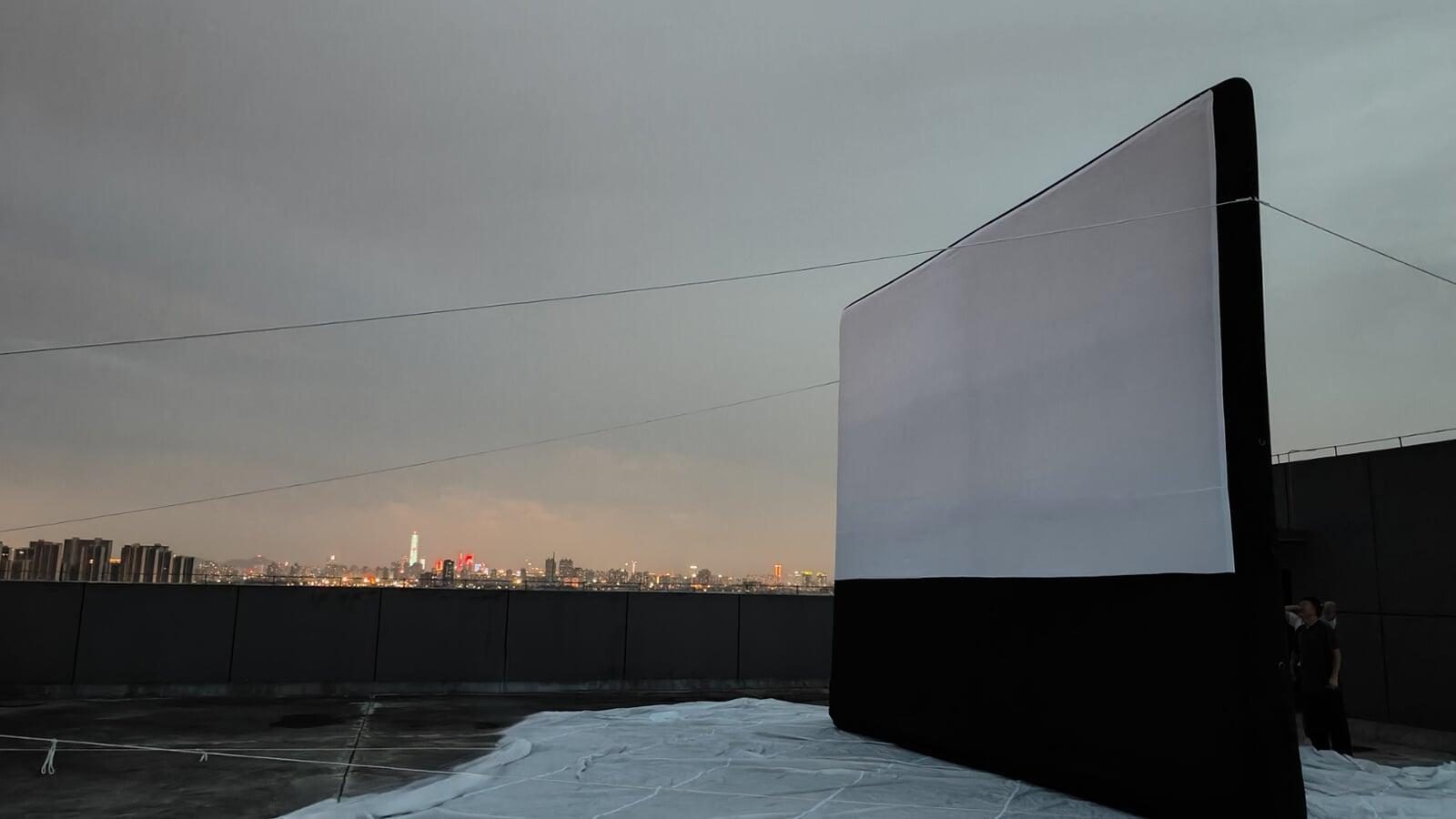
Heat fills the screenings. What to check on the equipment mid-season to stay visible.
☀️ Why the heat fills screenings
A viewer's reasoning on a heatwave evening is simple. Their apartment is an oven: the walls have stored up heat all day and release it at night. The air-conditioned theater downtown means getting back in the car and paying for a ticket. That leaves the village square, the park, the stadium — a screen, some chairs, and air that's finally starting to move.
That's where open-air cinema gains an advantage it doesn't have the rest of the year: it offers exactly what people are looking for, at the moment they're looking for it. An evening outdoors, free or nearly so, no booking required, where you can show up in flip-flops with the kids.
Key takeaway: a heatwave isn't a risk for an outdoor screening, it's its best selling point. The real risk is the storm that follows.
🎬 Mid-season, the moment you let your guard down
By August, the equipment already has twenty or so setups under its belt. That's precisely when small defects go unnoticed, because everyone is in a hurry and everything still works.
- Tears in the screen — A two-centimeter tear can be repaired. The same one, forgotten in the bag all winter, grows with every fold and ends up as a brand-new screen.
- The air beam seams — They work with every inflation. A five-minute visual check before packing away is better than a nasty surprise next June.
- The blower — A grille clogged with late-summer dust makes the motor overheat. A quick brush, and it's good for another season.
- Guy ropes and stakes — This is the most neglected item, and the only one that can truly put you in danger on a windy evening.
- Drying — A screen packed away damp will go moldy. Always unfold it and let it dry before putting it back in the bag, even if it means coming back the next day.
🌧️ The heatwave, then the storm
A heatwave rarely ends gently. It breaks, and it often breaks with a violent storm. For a team setting up at 3 p.m. in 38-degree heat to project at 10 p.m., the question is therefore not only how to cope with the heat, but how to have dry shelter when the sky falls.
That's why many touring organizers now equip themselves with an inflatable tent alongside the screen: shade during setup, a covered spot for the control desk, and protection for the video projector — the one element of the setup that doesn't forgive water.
📍 Letting people know your screening exists
The weak point of open-air cinema is almost never the programming. It's visibility. A screening announced only on the town's light-up notice board and a Facebook page won't be found by the person typing "open-air cinema" into a search engine at 6 p.m. looking for something to do that very evening.
That's why we maintain an open-air cinema calendar listing screenings in six countries. It's built every night from the public calendars of municipalities and organizers: if your screening is announced somewhere publicly, there's a good chance it will appear. If it isn't listed anywhere, it won't be there — and you just need to write to us to have it added by hand. It's free.
Practical info: for a screening to be picked up automatically, publish it with a date, a time, a precise location and the film's title. An announcement like "screening this summer on the square" is unusable by anyone, whether a search engine or a calendar.
✨ Conclusion
A hot summer is good news for anyone projecting outdoors. Provided the equipment gets through the second half of the season without damage, shelter is planned for the storm that will follow, and the audience knows where and when to come.
A question about a damaged screen, a screening to set up, or a session to list in the calendar? Write to us: contact us. We've been manufacturing inflatable screens since 1992, and we reply quickly.