
Products
Open-air cinema
Organize a screeningFree or ticketed?Start an outdoor cinemaCampsites & holiday parksBeach cinemaOpen-Air Movie ScheduleThe live skyAccessories & tools
AccessoriesCinema packagesComprehensive solutionsScreen rentalComparisonInstructions for useTools
Screen ConfiguratorTent ConfiguratorFurniture ConfiguratorLounge configuratorArch configuratorAirtight side viewBlower side viewThe company
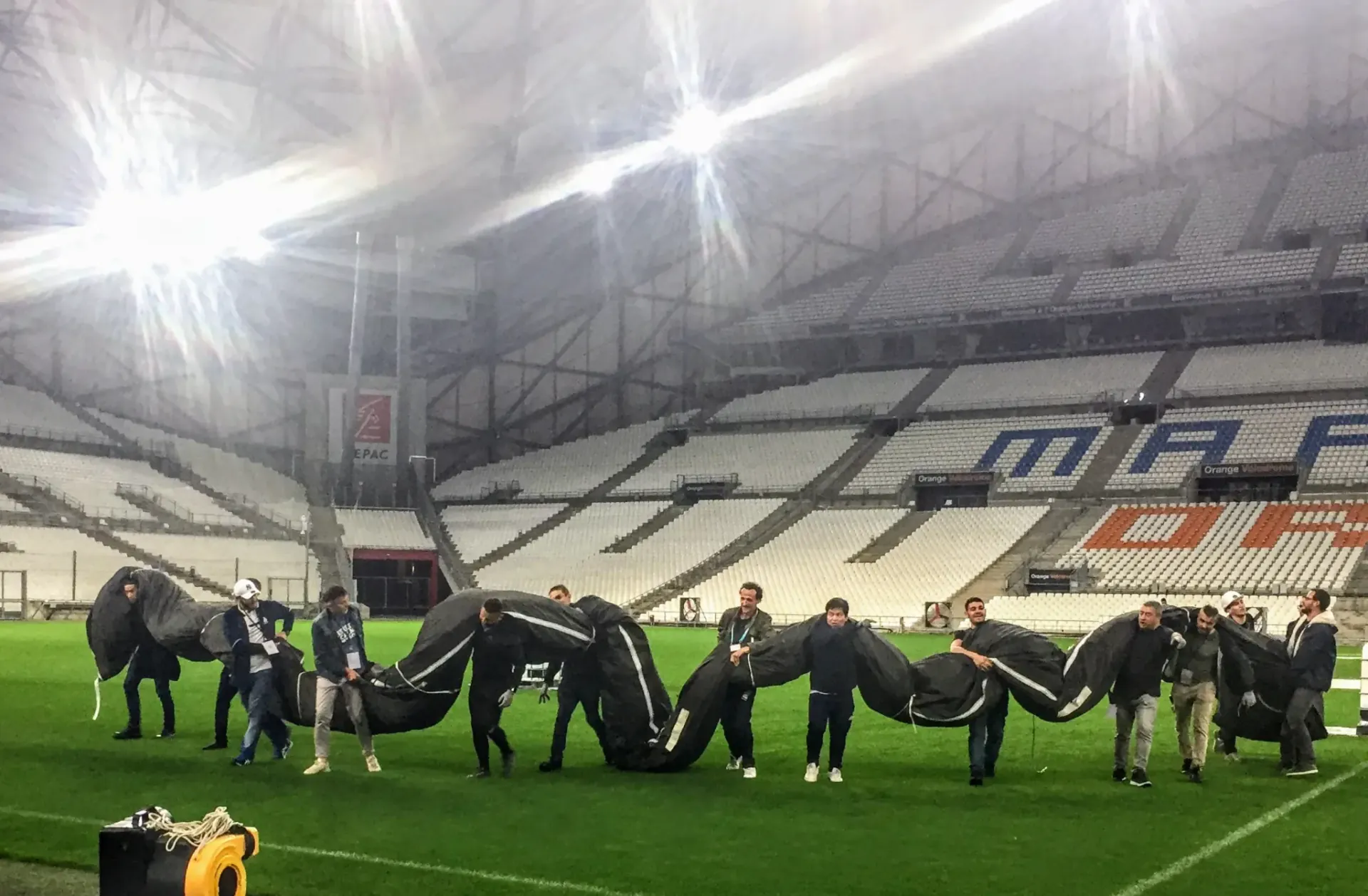
Weight, setup, dismantling, logistics: the real criteria to consider before choosing a giant screen.
The answer naturally depends on the model chosen, but also on its weight, its inflation system, site access, wind, available time and the team's experience.
And that's often where the difference between two screens of the same size becomes enormous.
Size doesn't tell the whole story
Two 40-foot screens may seem comparable on a technical data sheet. Yet once on the screening site, they can require very different organization.
A heavy screen may require several people to move it, position it, raise it, secure it and then fold it away. It can take more time, more hands, more floor space and more energy at the time of dismantling.
Conversely, a lighter screen designed for the field can greatly reduce these constraints. Setup becomes simpler, transport easier, and the team keeps some margin to manage the rest of the event.
Why the number of people matters so much
At a screening, the screen is only part of the job. You also have to think about the projector, the sound, the cables, welcoming the public, safety, the weather and sometimes permits.
If setting up the screen mobilises four people for an hour or more, that changes the whole organization. If dismantling still takes a long time after the session, often late at night, fatigue becomes a real issue.
That's why the number of people required is not a technical detail. It's a real cost: in time, energy, logistics and working comfort.
A concrete example: a 40-foot screen
On a 40-foot Hallucine inflatable screen, you can have a very light assembly for this size, around 177 lbs depending on the configuration.
With some more traditional competing systems, a comparable screen can reach around 552 lbs. On paper, both are giant screens. On site, it's not the same thing at all.
A 40 ft Hallucine screen can be set up quickly, in around 40 minutes with a single experienced person depending on conditions. Dismantling can also be very fast, around 30 minutes.
With a much heavier system, you often have to plan for several people, more handling, and a longer dismantling process.
Fewer people isn't just more convenient
Needing fewer people to set up a screen isn't just a matter of comfort.
- reduce labour costs
- work in harder-to-reach locations
- save time before and after the screening
- limit team fatigue
- simplify tours or repeated events
- react more easily if the weather changes
For a municipality, a festival, an event provider or a touring organization, these details can make a real difference over a full season.
The case of small airtight screens
For smaller screens, particularly airtight models, the benefit is different again.
Once inflated, they stay pressurised without a permanent blower. They are therefore silent, which is very useful for certain indoor screenings, quiet events, conferences or places where noise must remain discreet.
They are also compact, easy to transport, and can suit lighter installations with little floor space.
So, how many people should you plan for?
For a small screen, one or two people can often be enough depending on the location and configuration.
For a large screen, it all depends on the model. With a well-designed, lightweight screen, the team can stay small. With a heavier structure, you often need several people just for handling and setup.
The right question is therefore not only: "What screen size do we need?"
- how much does the screen weigh?
- how many people are needed to set it up?
- how long does dismantling take?
- what vehicle is needed to transport it?
- can the team handle it easily several times in the season?
Conclusion
A giant cinema screen must be impressive for the audience, but simple to manage for the team.
That's exactly why weight, setup time and the number of people required are just as important as the size of the image.
A lighter screen isn't just more pleasant to handle. It can make the event simpler, faster, more reliable and more profitable on site.
At Hallucine, our screens are designed with this logic: deliver a large image, while making life easier for the teams who set up, dismantle and transport the equipment.
Have a project?
Request a free quote: our team will respond within 24 hours to guide you towards the most suitable solution.