
Products
Open-air cinema
Organize a screeningFree or ticketed?Start an outdoor cinemaCampsites & holiday parksBeach cinemaOpen-Air Movie ScheduleAccessories & tools
AccessoriesCinema packagesComprehensive solutionsScreen rentalComparisonInstructions for useTools
Screen ConfiguratorTent ConfiguratorFurniture ConfiguratorLounge configuratorArch configuratorAirtight side viewBlower side viewThe company
Full history of formats, differences between countries and film examples for each.
The origins of cinema: the 1.33 ratio
As early as the 1890s, 35 mm film imposed the 1.33:1 (4/3) format, meaning four units wide for three high; the "Academy format" 1.37:1 was not established until 1932. This format remained the standard for silent cinema for three decades.
The first films projected in theaters were shot in this format, and the cinematic experience was established around this proportion.
The 1950s: the arrival of widescreen cinema
Facing competition from television, Hollywood launched Cinerama (2.59:1) in 1952, followed by CinemaScope (2.55:1, later reduced to 2.35:1) to offer a spectacle that the small screen could not reproduce.
These panoramic formats required special lenses and wider screens. The 1953 CinemaScope revolutionized the industry with its anamorphic lenses.
Modern formats by country
North America
The United States and Canada primarily use:
- 1.78:1 (16:9) — HD television and home cinema standard
- 2.39:1 — Standard format for Hollywood blockbusters
- 1.85:1 — Common format for mainstream productions
Europe
Europe adopts slightly different standards:
- 1.66:1 — Former European standard, now obsolete
- 1.78:1 — For international productions
- 1.33:1 — Still used for certain classics and art-house films
Asia
The Asian market shows varied preferences:
- 2.35:1 — For large-scale productions and hit films
- 1.85:1 — For dramas and TV series
- 1.66:1 — In Japan, the preferred domestic format
Comparison table of formats
| Format | Ratio | Main usage |
|---|---|---|
| Silent (4/3) | 1.33:1 | Silent cinema, classics |
| American | 1.85:1 | Mainstream Hollywood films |
| Panavision | 2.35:1 | Blockbusters, epics |
| HDTV | 1.78:1 | Television, streaming |
| European | 1.66:1 | European cinema |
| IMAX | 1.43:1 | Documentaries, spectacles |
Examples of films by format
2.35:1 Format (Panavision)
- Moonlight (2016) — Intimate drama in widescreen format
- Star Wars (1977) — Infinite space made famous
- Inception (2010) — Epic action scenes
1.85:1 Format (American standard)
- The Avengers (2012) — Superheroes in widescreen format
- In the Air (2009) — Dramedy starring George Clooney
- Toy Story 3 (2010) — Family animation
1.78:1 Format (16:9)
- Breaking Bad — Modern TV series
- Stranger Things — Shot in 2.00:1, slightly wider than 16:9
- Netflix documentaries — Optimal use of the format
The shift to digital
Since 2010, digital projection has transformed the industry. The DCI (Digital Cinema Initiatives) standards define:
- 2K — 2048x1080 pixels
- 4K — 4096x2160 pixels
These resolutions allow for superior image quality and more flexible distribution.
Impact on inflatable screens
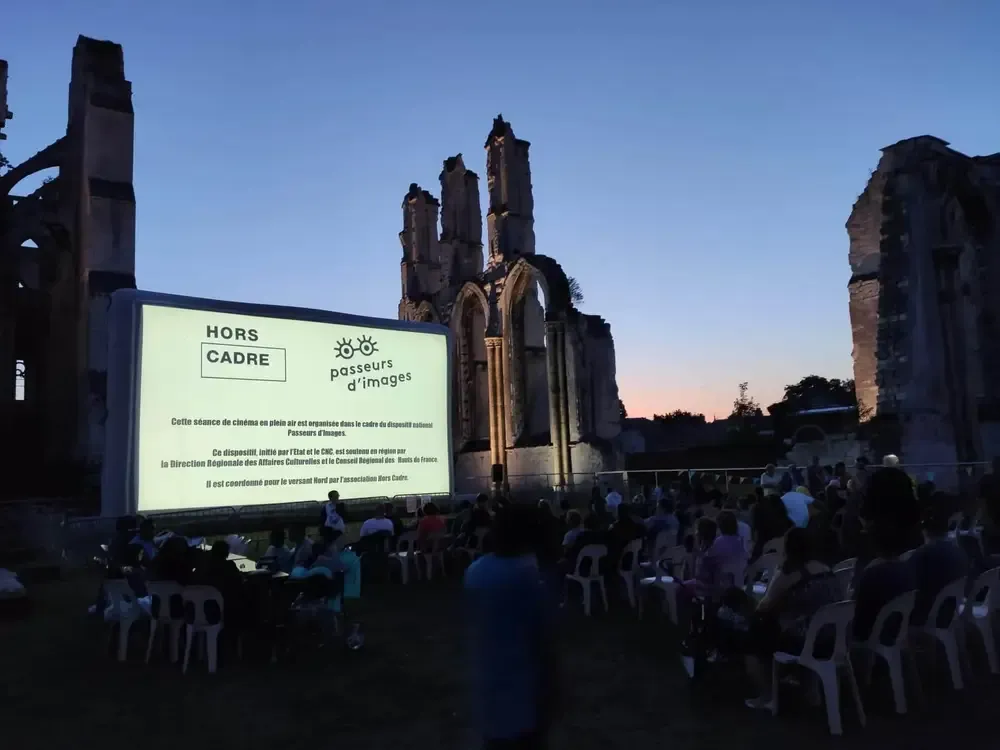
For open-air screenings with inflatable screens, the 16:9 (1.78:1) format remains the most common. It is compatible with the majority of modern content:
- Contemporary films
- TV series
- Streaming content
- Advertising and events
Practical info: For an outdoor cinema inflatable screen, the 16:9 format offers the best compatibility. For classic films in the Academy format, black bars appear on the left and right of the image.
Conclusion
The history of projection formats reflects the evolution of cinema itself. From the 1.33 ratio of early films to contemporary 2.35:1 panoramas, each format tells part of the story of the seventh art.
Whether you are organizing an open-air movie night or choosing a professional screen, understanding these formats allows you to create the optimal experience for your audience.
Need an inflatable screen suited to your preferred format? Discover our solutions at /contactez-nous. 🎬✨